Skip to content
Woodshop Atlas

Woodshop Atlas – Plan your space. Build something great.

  • Start Here
  • Workshop Layouts
  • Tools & Buying Guides
  • Storage & Workbenches
  • Calculators
  • Resources

Home › Tools & Buying Guides

Tools & Buying Guides

Which tool to buy next, what fits a small shop, and head-to-head comparisons based on published specs and footprints.

Beginner Woodworking Tools: What You Need First (and What Can Wait)

November 13, 2026 by Cal Oakley
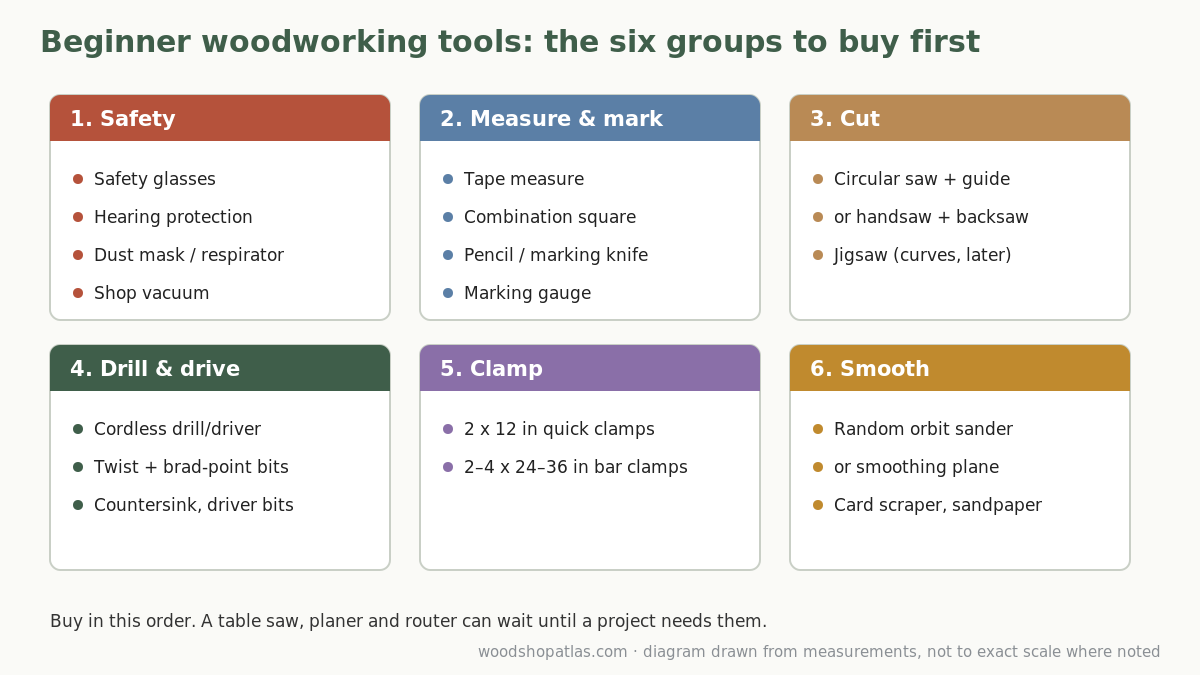
Diagram of a beginner woodworking tool kit in six groups: safety, measuring and marking, cutting, drilling and driving, clamping, and sanding and smoothing

A starting kit for someone with no tools yet: safety gear first, then measuring and marking, one good saw, a drill/driver, clamps and sanding, with a power-tool path and a hand-tool path and a list of what can wait.

Categories Tools & Buying Guides

Tools for Building Shelves: What You Need First (and What Can Wait)

November 13, 2026 by Cal Oakley
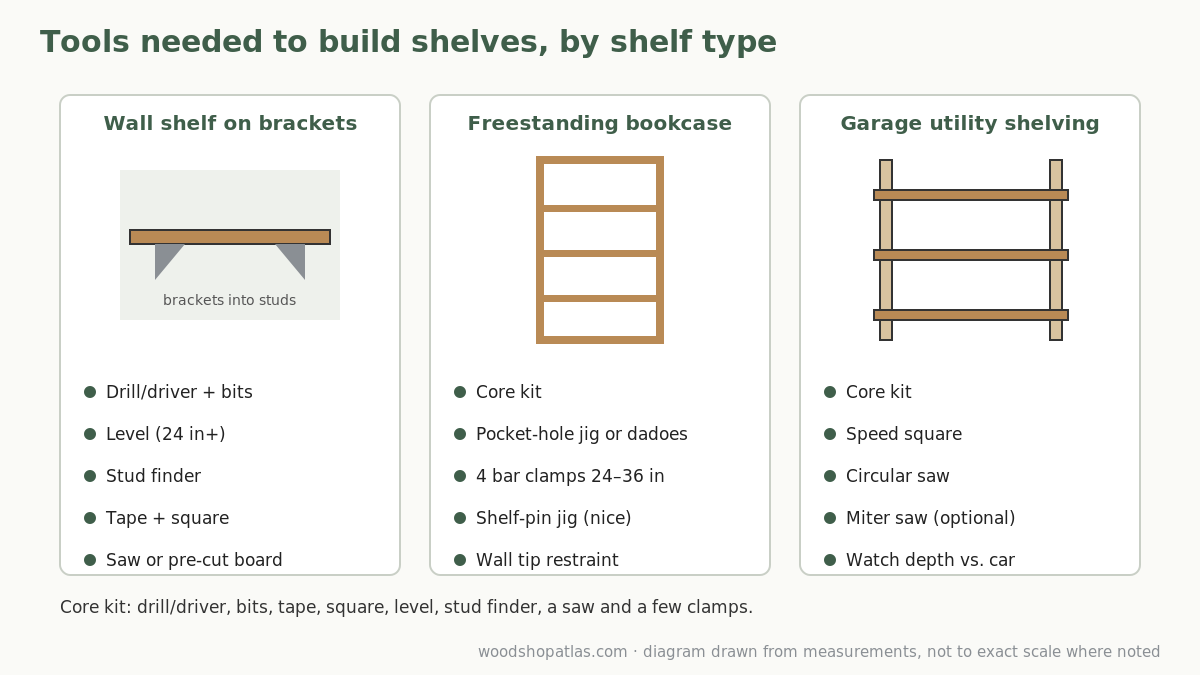
Diagram showing three shelf types (wall shelf on brackets, freestanding bookcase, garage utility shelving) with the core tools each one needs

A drill, a saw you can guide straight, a level, a stud finder and a few clamps build most shelves. Here’s the short list by shelf type, and how to size shelves so they don’t sag.

Categories Tools & Buying Guides

Track Saw vs. Table Saw for a Small Workshop

November 13, 2026November 13, 2026 by Cal Oakley
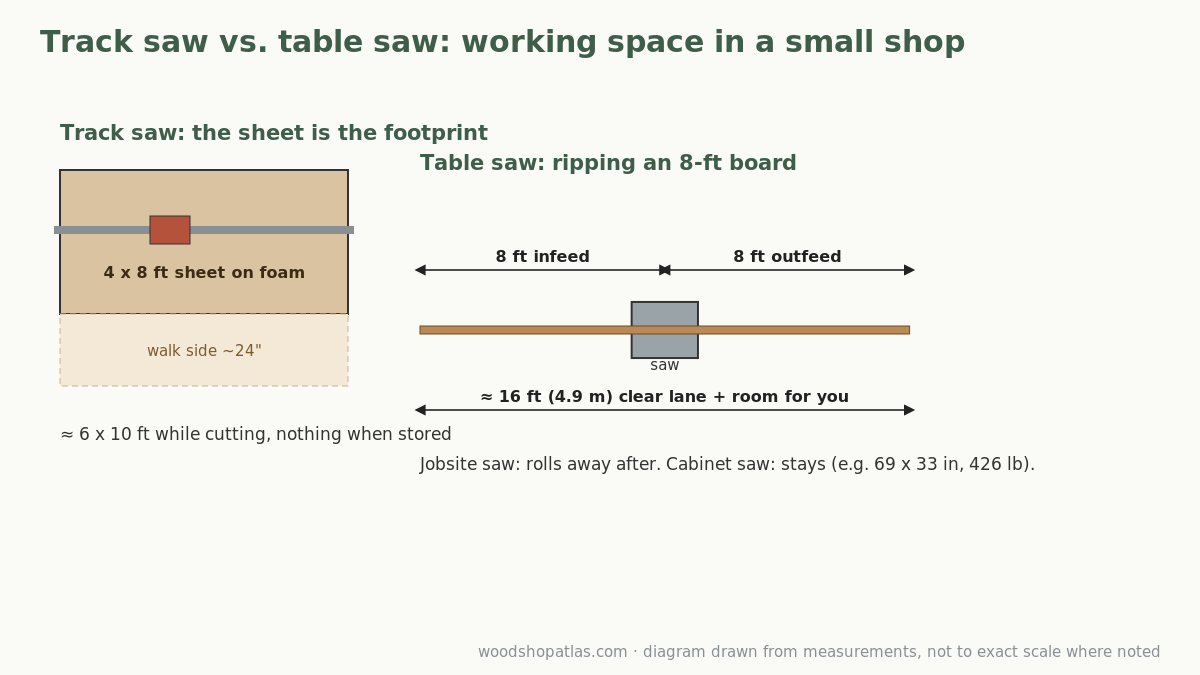
Diagram comparing working space: a track saw cutting a 4 x 8 ft plywood sheet on foam board on the floor versus a jobsite table saw needing about 8 ft of infeed and 8 ft of outfeed to rip an 8 ft board

A track saw breaks down plywood anywhere and stores in a box. A table saw rips narrow, repeatable parts all day but needs a 16-foot lane. Here’s how to choose for a small shop.

Categories Tools & Buying Guides

What to Buy After a Circular Saw and Drill (In the Right Order)

November 13, 2026 by Cal Oakley
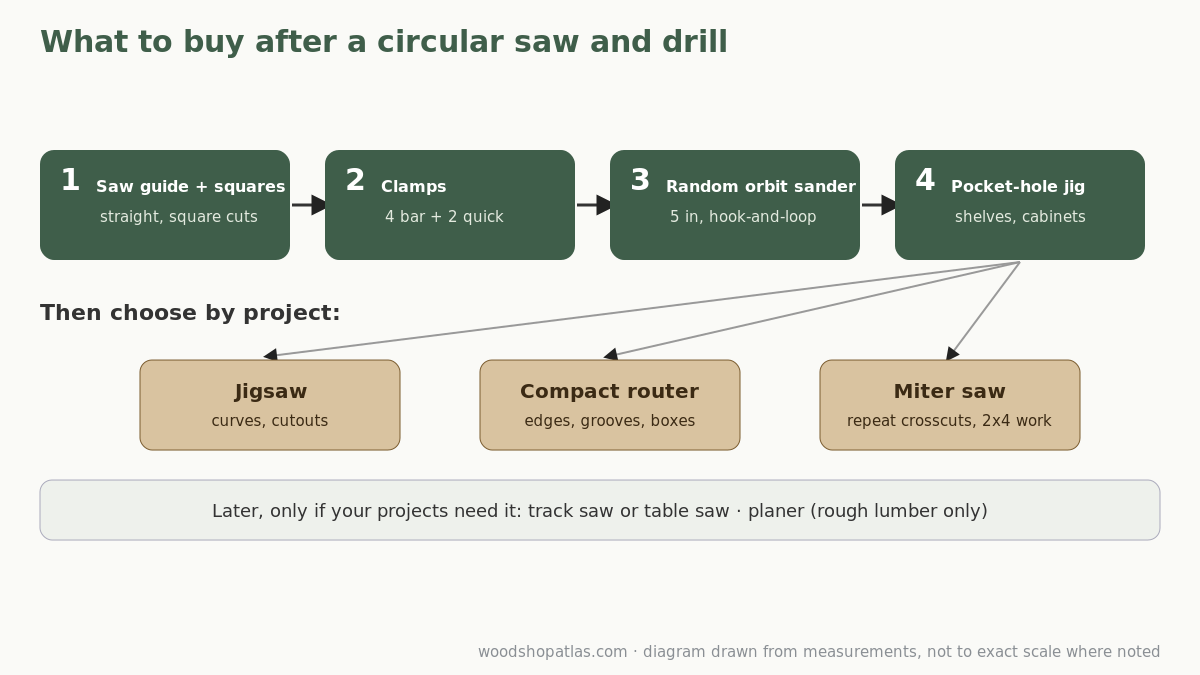
Flow diagram of a woodworking tool buying sequence after a circular saw and drill: saw guide and square, clamps, random orbit sander, pocket-hole jig, then branching to jigsaw, router or miter saw depending on projects

You already own the two tools that do most of the cutting and joining. The next purchases should make those two accurate, then fill the gaps your projects actually hit.

Categories Tools & Buying Guides
  • About
  • Contact
  • Editorial Policy
  • Affiliate Disclosure
  • Privacy Policy
  • Terms of Use
  • Disclaimer

Woodshop Atlas publishes researched guides for planning small home workshops. Some links are affiliate links; see our affiliate disclosure.

© 2026 Woodshop Atlas